01
Mount the sensor
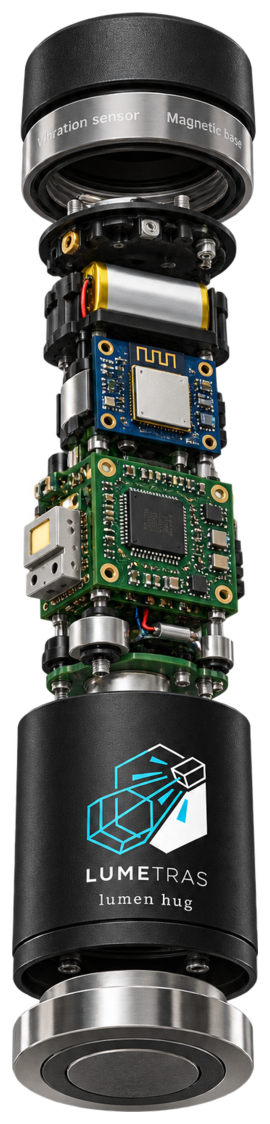
Attach the wireless sensor to the equipment using its magnetic base.
Monitor machine temperature and vibration. Use machine learning to flag unusual readings and plan maintenance.







Connect equipment sensors and review readings for changes. Lumen ML models support predictive maintenance analysis.
Connect available PLC, SCADA, sensor, and equipment data sources. Supported connections depend on the source and configuration.
Organize incoming readings for analysis. Connected systems determine which data is available and how quickly it arrives.
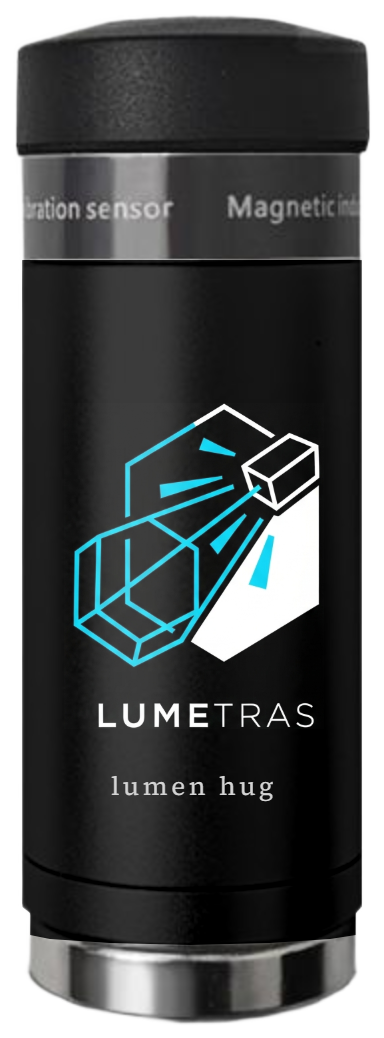
Lumen Hug uses wireless temperature and vibration sensors to flag unusual readings for maintenance review.
Review readings from connected equipment in shared views. The connected systems determine which readings and workflows are available.
Machine learning reviews sensor data for patterns that may indicate a change in equipment condition. Maintenance teams review alerts and decide what action to take. The goal is to help reduce downtime, not guarantee it.
Configured analysis can flag unusual patterns in connected production, energy, or quality data for review.
Forecasts estimate yield or equipment performance from configured data. Review estimates before making production or maintenance decisions.
Use natural-language queries to ask about connected factory data. Review generated summaries before using them to make decisions.
Vision systems inspect product images for review. Evaluate each site and have people check detections. The system does not guarantee defect detection or lower costs.
Compare connected site data to help teams investigate differences between production lines.
Connected sensors and edge devices can collect measures such as equipment state, energy, temperature, and pressure.
A data layer can organize connected plant information and link it with available ERP data.
Depending on configuration, the MES layer can support production orders, downtime records, shift reports, and quality checks.
Machine learning tools can support anomaly review, predictive maintenance, yield forecasting, and natural-language queries.
Lumen Hug 2.0 · On-machine sensing
Lumen Hug 2.0 sends machine readings to the Lumetras maintenance platform. The wireless sensor uses a magnetic base for mounting.
How it works
Compare sensor readings with normal machine conditions. Review flagged changes with your maintenance team before scheduling work.
Attach the wireless sensor to the equipment using its magnetic base.
Collect temperature and vibration readings while the machine runs. Use these readings to establish a baseline.
Review readings that differ from the baseline. Check machine conditions before deciding on maintenance.
We check alert channels and maintenance-system connections for each site.
LUMEN HUG 2.0
A handheld records readings during a technician visit. Lumen Hug measures every 10 minutes. It captures a full waveform when a limit is crossed. Use the handheld to inspect machines that Lumen Hug flags.
It monitors signs of bearing wear, rotor imbalance, shaft misalignment, mechanical looseness, lubrication loss, and overheating. It can also flag signs of gear mesh wear and pump cavitation. Inspect flagged equipment to confirm the fault.
Pricing is $35 to $49.99 USD per sensor per month, based on volume. This includes the sensor, gateway, dashboard, AI models, and alerts. You can start with a pilot on selected lines.
Yes. The Lumetras OEE dashboard shows machine health alongside production and downtime. Other connection options include an API, scheduled exports, or MQTT. We review your reporting, SCADA, or maintenance system before setup. Sage X3 integration can be planned as a later phase.
Warnings may arrive days or weeks before failure. Timing depends on the fault and available readings. The initial baseline takes about two weeks. Repair records help refine the remaining-life estimate. No warning period is guaranteed.
Yes. Each sensor stores 1,000 readings. This is about one week at the standard 10-minute interval. The gateway also buffers data. Stored readings sync when the connection returns. Recovery depends on available storage.
Rotating equipment such as pumps, fans, compressors, gearboxes, and conveyors. We review the asset and mounting position before setup.
Maintenance planning: use equipment readings to plan work and spare parts.
Ask our team for a demo using your machines.
Reliability reports: review repeated faults and compare readings before and after repairs.